
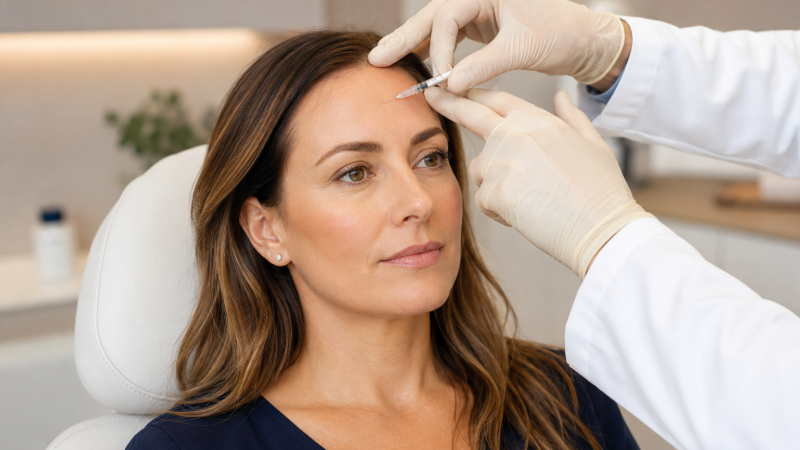
Botulinum Toxin Treatments
 
Botulinum toxin is a medical product that temporarily reduces signals transmitted from nerve endings to muscles or sweat glands. Although commonly referred to as "Botox" by the public, Botox is actually the trade name of a specific brand.
 
Botulinum toxin is not snake venom; it is a purified form of the toxin produced by the *Clostridium botulinum* bacterium, processed for medical use. The specific product, dosage, and injection sites are determined based on the individual's anatomy and the treatment goals.
 
 How Does It Work?
 
Botulinum toxin temporarily reduces nerve-to-muscle transmission in the treated area. This allows for a controlled reduction in the contractile strength of specific muscles.
 
The goal is not to completely immobilize facial muscles, but rather to reduce the movement of targeted muscles while preserving the individual's natural expression and facial balance. The effects are not permanent and diminish over time.
 
Where Can It Be Applied?
 
Botulinum toxin is particularly effective for addressing dynamic lines—wrinkles that become prominent through facial expressions. Key treatment areas include:
 
*   Horizontal forehead lines
*   Lines between the eyebrows (glabellar lines)
*   Crow's feet (lines around the eyes)
*   Nose, chin, and mouth areas (in selected cases)
*   Specific muscle bands in the neck
 
Botulinum toxin alone may not be sufficient for deep, static lines that are visible even when the face is at rest. Other methods may be required to address volume loss, skin discoloration, and reduced skin elasticity.
 
## Personalized Treatment Planning
 
Muscle strength and placement, eyebrow shape, eyelid position, facial asymmetry, and habitual facial expressions vary from person to person. Therefore, applying the treatment at the same points and in the same dosages for everyone is not appropriate. Before the procedure, the face is assessed both at rest and during facial expressions. Previous treatments and their outcomes are also taken into account during the planning stage.
 
 When Do Effects Begin?
 
Initial changes usually become noticeable within a few days. The onset and duration of the effect may vary depending on the product used, the dosage, the treatment area, muscle strength, and individual characteristics.
 
The timing of the follow-up appointment is determined by the physician. Unless deemed necessary, additional treatment in the early stages may not be appropriate.
 
 Treatments for Excessive Sweating
 
Botulinum toxin can also be used in suitable candidates to reduce excessive sweating in areas such as the underarms. Where necessary, the relationship between the sweating and medications, thyroid disorders, infections, or other systemic conditions is investigated.
 
 Potential Side Effects
 
Redness, tenderness, bruising, headache, or temporary asymmetry may occur at the injection site following the procedure. Temporary changes in eyebrow or eyelid position, smiling, or facial expressions may also occur.
 
Very rarely, symptoms such as difficulty swallowing, speaking, or breathing may develop. In such cases, urgent medical evaluation is required.
 
 For Whom May It Not Be Suitable?
 
The procedure may be postponed or deemed unsuitable in the following situations:
 
*   Active infection at the treatment site
*   Known hypersensitivity to the product
*   Certain diseases affecting neuromuscular transmission
*   Pregnancy or breastfeeding
*   Use of medications that may interact with botulinum toxin
*   The procedure being deemed unsuitable for the individual
 
All medications, supplements, medical conditions, and previous procedures must be disclosed to the physician prior to treatment. Prescription medications should not be discontinued without the physician's advice.
 
Specialist At Dr. Armin Müştak’s dermatology practice, suitability for botulinum toxin treatment is determined through a dermatological and anatomical assessment. Expected effects, limitations, potential risks, and alternatives are discussed prior to the procedure.

Frequently Asked Questions

Botulinum toxin temporarily reduces the activity of targeted muscles. For cosmetic purposes, it is commonly used to soften the appearance of expression lines on the forehead, between the eyebrows, and around the eyes. In suitable patients, it may also be considered for other conditions, such as excessive sweating. Unlike dermal fillers, botulinum toxin does not add volume to the tissues.

The effects usually begin within a few days, with the final result typically assessed after 10–14 days. For the treatment of expression lines, the effects commonly last around three to four months. This may vary depending on the product used, treatment area, dose, and individual factors. The appropriate timing for repeat treatment is determined during a follow-up assessment.

The aim of treatment is to preserve natural facial expression while reducing the activity of targeted muscles in a controlled manner. Injection points and dosage are planned according to facial anatomy and individual expectations. Excessive dosing or improper treatment may cause unwanted changes in facial expression.

As the effects wear off, muscle movement and the expression lines associated with it gradually return. Stopping treatment does not, by itself, make wrinkles worse than they were before. However, natural aging and the effects of sun exposure on the skin continue over time.

Cosmetic botulinum toxin treatment is generally postponed during pregnancy and breastfeeding. An infection at the injection site, certain neuromuscular disorders, or a history of allergy to the product requires careful medical assessment. Tell your doctor about all medications you take and any previous botulinum toxin treatments. Do not stop taking any medication without medical advice.

Temporary redness, tenderness, swelling, or bruising may occur at the injection sites. Headache, asymmetry, and temporary eyebrow or eyelid drooping are also possible. Do not rub or massage the treated area, and follow the aftercare instructions provided. Although rare, seek urgent medical attention if you develop difficulty swallowing, speaking, or breathing.

Contact Us