
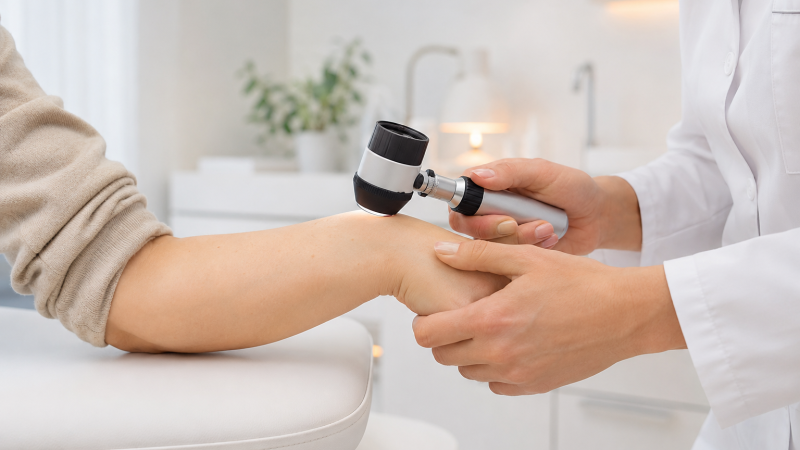
Dermatology is the branch of medicine concerned with the diagnosis, treatment, and follow-up of conditions affecting the skin, hair, nails, and mucous membranes. During the examination, the patient’s symptoms, medical history, medications, and clinical findings are evaluated together. When necessary, diagnostic methods such as dermoscopy, Wood’s lamp examination, skin biopsy, and appropriate laboratory tests may be used.
Dermatological Conditions Evaluated
Our practice evaluates acne, rosacea, eczema, psoriasis, urticaria, fungal infections, warts, moles, pigmentation disorders, hair loss, scalp conditions, and nail disorders.
Bacterial, viral, parasitic, and fungal skin infections, as well as sexually transmitted infections and lesions of the genital area, are also assessed within the scope of dermatology.
Dermoscopic Examination
Dermoscopy enables detailed examination of moles and pigmented skin lesions using a specialized light and magnification system. Depending on the examination findings, lesions that appear suspicious or show changes may require monitoring, biopsy, or surgical removal.
Hair and Nail Disorders
Hair loss may be associated with genetic factors, hormonal changes, nutritional deficiencies, certain medical conditions, medications, or stress. After examining the scalp and hair follicles, any necessary investigations and treatment options are planned.
Changes in the color, shape, or structure of the nails may be related not only to fungal infections but also to trauma, eczema, psoriasis, or certain systemic conditions. Treatment is planned according to the underlying cause.
Diagnostic Tests and Skin Biopsy
Depending on the clinical findings, diagnostic methods such as skin biopsy, patch testing, skin-prick testing, pathergy testing, or fungal examination may be used. When required, collected skin samples are sent for pathological examination.
Dermatological Procedures
For suitable patients, cryotherapy, electrocautery, intralesional injections, biopsy, or minor surgical procedures may be performed for warts, keratoses, fibromas, and similar skin lesions. The appropriate procedure is selected according to the type, location, size, and clinical characteristics of the lesion.
Personalized Treatment and Follow-up
The treatment plan is tailored to the diagnosis, severity of the condition, patient’s age, accompanying medical conditions, and current medications. The progress of treatment is monitored through follow-up examinations when necessary.
Your dermatologist will first ask when your symptoms began, how they have progressed, which medications you take, and about your medical history. The affected areas of the skin, hair, nails, or mucous membranes are then examined. Depending on the findings, further tests may be recommended and an appropriate treatment plan developed.
Dermatology focuses on the diagnosis and treatment of conditions affecting the skin, hair, nails, and mucous membranes. These include acne, eczema, psoriasis, rosacea, hives, fungal infections, warts, hair loss, and nail disorders. The assessment of moles and suspicious skin lesions is also an important part of dermatology.
You should see a dermatologist if you have persistent or recurring itching, rashes, redness, acne, hair loss, or changes in your nails. Wounds that do not heal, as well as moles that grow, bleed, or change in color or shape, should be evaluated promptly. Skin-related concerns that affect your daily life are also an important reason to seek dermatological care.
Bring a list of the medications and skincare products you use, along with any previous test results and details of past treatments. If your symptoms come and go, photographs taken when they were more noticeable may help with the assessment. Avoid wearing makeup or nail polish that could cover the area to be examined.
No. Many skin conditions can be assessed based on your medical history and the findings from a physical examination. When necessary, tests such as blood work, fungal testing, cultures, allergy testing, or a skin biopsy may be recommended. The tests required will depend on the condition your dermatologist suspects.
A mole should be assessed if it changes in size, shape, or color; begins to bleed or itch; or looks different from your other moles. If necessary, a dermatologist can examine it more closely using dermoscopy. The recommended frequency of routine mole checks depends on your mole pattern and individual risk factors.
Yes. Dermatologists assess hair loss, itching or flaking of the scalp, and nail changes such as discoloration, thickening, brittleness, or changes in shape. Because similar symptoms can have different causes, identifying the underlying cause is important before starting treatment.
The duration of treatment depends on the type and severity of the condition and how the individual responds to treatment. Some conditions improve within a short period, while chronic or recurring conditions may require long-term management and follow-up. At follow-up appointments, the response to treatment is assessed and the treatment plan adjusted when necessary.