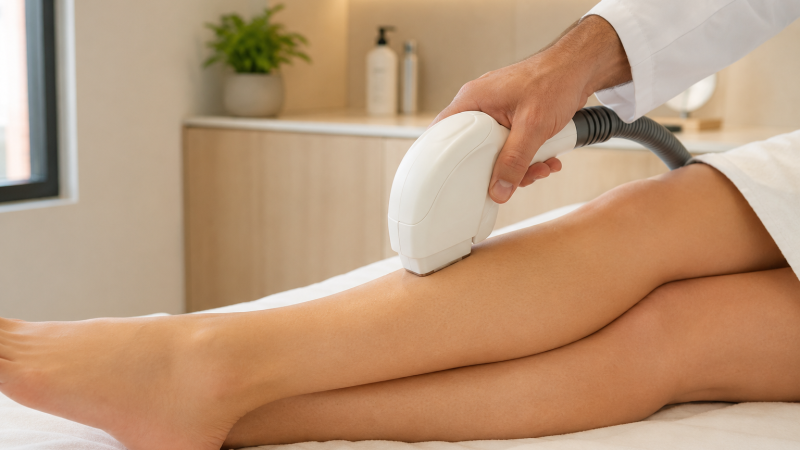
Laser hair removal is a light-based procedure designed to achieve a long-term reduction in unwanted hair. Laser energy is absorbed by the melanin within the hair shaft and transmitted to the hair follicle. The goal is to create a controlled effect on the hair follicle while protecting the surrounding skin as much as possible.
Results vary depending on skin tone, hair color and thickness, the treatment area, hormonal status, the device used, treatment parameters, and the hair growth phase. Laser hair removal does not guarantee the definitive and permanent elimination of all hair. A reduction in hair count, thickness, and growth rate is expected; however, new hair growth may occur over time, and touch-up sessions may be required.
**Laser Systems Used**
Systems with various wavelengths can be utilized for laser hair removal:
* Alexandrite laser – 755 nm
* Diode laser – approximately 810 nm
* Nd:YAG laser – 1064 nm
* IPL (Intense Pulsed Light) systems
Technically, IPL is not a laser but an intense pulsed light technology that utilizes a range of wavelengths. The system and treatment parameters to be used are determined based on the individual's skin type, hair characteristics, treatment area, and clinical findings.
dermatologist Dr. Armin Müştak’s dermatology practice is equipped with a hybrid laser system (incorporating 755, 810, and 1064 nm wavelengths), an IPL system, and a 1064 nm Nd:YAG laser.
**The Importance of Skin and Hair Type**
Dark, coarse hair generally absorbs laser energy more effectively. Since white, gray, and very light-colored hairs contain little melanin, an adequate response may not be achieved.
Because the melanin in the skin can also absorb laser energy, skin tone and tanning affect the safety of the procedure. For dark or tanned skin, device and energy settings must be selected carefully. If necessary, the procedure may be postponed, or a test shot performed on a small area.
**Number of Sessions and Treatment Areas**
Since hairs are in different growth phases, it is not possible to target all hairs in a single session. The number of sessions and the intervals between them are determined individually based on the treatment area, hair characteristics, age, hormonal factors, and the response to the previous session. It is not appropriate to specify an exact number of sessions or the expected success rate without a prior examination.
Laser hair removal can be applied to various areas, such as suitable parts of the face, underarms, arms, legs, back, chest, abdomen, and the bikini area. There are significant restrictions regarding the eye area and eyebrows. Treatment is not performed over areas with tattoos. Areas with moles, suspicious skin lesions, open wounds, infections, or significant irritation must be dermatologically evaluated prior to the procedure.
**Pre-Treatment Considerations**
Before the procedure, the individual's medical history, medications, pregnancy status, skin type, history of sun exposure, and any previous laser treatments are evaluated.
Before the session:
* Methods that remove hair from the root—such as waxing, tweezing, or epilators—should not be used.
* Hair may be shortened using a razor or trimmer at the recommended time.
* Tanning and the use of tanning beds should be avoided.
* The physician must be informed of any medications taken or topical products applied to the skin.
* The physician must be informed of any wounds, irritation, or infections in the treatment area.
Treatment is generally postponed during pregnancy. The procedure may not be suitable in cases of active infection, open wounds, recent intense sun exposure, or the use of certain medications that may increase photosensitivity. **Procedure and Potential Side Effects**
During the procedure, sensations such as heat, stinging, or a feeling similar to a rubber band snap may occur. The level of discomfort experienced varies depending on the individual's pain threshold, the treatment area, hair density, and the system used. Cooling methods help protect the skin and minimize discomfort.
After the procedure, temporary redness, mild swelling, a sensation of heat, or tenderness may appear around the hair follicles. Less frequently, complications such as blistering, superficial burns, crusting, infection, discoloration, cold sore flare-ups, scarring, or an unexpected increase in hair growth in certain areas may occur.
**Sun Exposure, Hormonal Status, and Individual Assessment**
When planning laser hair removal, factors beyond just the season—such as the individual's tan level, skin type, and the treatment area's exposure to the sun—are taken into account. It is important to avoid direct sunlight and tanning beds before and after the procedure and to use the recommended sunscreen.
If unexpected hair growth on the face or body is accompanied by menstrual irregularities, acne, or hair loss, it may be necessary to investigate potential hormonal causes. Hormonal factors can lead to continued new hair growth and the need for additional sessions.
At the Dermatology Practice of dermatologist Dr. Armin Müştak, the laser hair removal plan is tailored to the individual based on their skin and hair characteristics, the treatment area, and the results of the medical assessment.