
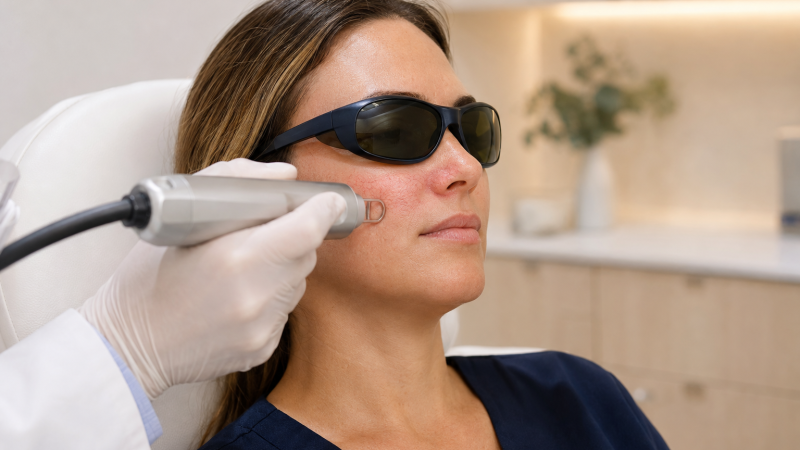
Laser Treatment for Visible Blood Vessels
 
Fine red, purple, or blue veins appearing on the face or various parts of the body may be referred to as capillary dilation, telangiectasia, or spider veins.
 
The appearance of facial veins can be associated with genetic predisposition, sun exposure, rosacea, skin sensitivity, and aging. Fine veins on the legs, however, may be linked to hormonal factors, pregnancy, prolonged standing, or conditions affecting the venous system.
 
Not every visible vein is suitable for laser treatment. Before the procedure, the vein's diameter, color, depth, location, and any accompanying symptoms are evaluated.
 
How Does the Laser Work?
The energy from the laser and light systems used in vein treatment is absorbed by the hemoglobin within the blood vessels. The aim is to reduce the visibility of the targeted vein over time through the effect of controlled heat.
 
The wavelength and treatment parameters to be used are determined based on the vein structure, the treatment area, and the skin type. Cooling systems may be employed to protect the skin and minimize discomfort.
 
Which Veins Can Be Treated?
In suitable candidates, the following types of veins can be treated:
 
Fine red capillaries on the face
 
Telangiectasias around the nose
 
Superficial veins on the cheeks and chin
 
Selected vascular structures associated with rosacea
 
Certain fine veins on the torso or legs
 
Since some vein-like formations may be associated with various dermatological conditions, establishing a diagnosis prior to treatment is important.
 
Are Large Varicose Veins Treated Using the Same Method?
Bulging, enlarged varicose veins are not the same as fine, superficial veins. If there is leg pain, swelling, a sensation of heaviness, night cramps, discoloration, or visibly raised veins, an evaluation for venous insufficiency may be required.
 
Doppler ultrasonography and a cardiovascular surgery consultation are requested when necessary. Dermatological surface lasers do not replace the endovenous laser procedure performed by inserting a catheter into the vein.
 
Systems Used
Different laser and light systems may be used for spider vein treatment, depending on the vascular structure.
 
At the Dermatology Practice of Specialist Dr. Armin Müştak, a 1064 nm long-pulsed Nd:YAG laser and, in appropriate cases, an IPL system may be used to treat selected visible veins. The choice of system depends on the vascular structure, the treatment area, and the skin type.
 
Number of Sessions and Treatment Process
The number of sessions required varies based on the vein's diameter, depth, and color, as well as the individual's response to the treatment. While some small veins may show improvement after the first session, multiple sessions may be necessary in some cases.
 
It cannot be guaranteed that all veins will disappear completely or that definitive results will be achieved within a specific number of sessions. New veins may form in the same or different areas over time.
 
During the procedure, a brief sensation of heat, stinging, or a feeling similar to being snapped by a rubber band may occur.
 
Possible Side Effects
Temporary redness, swelling, tenderness, bruising, or darkening of the veins may occur after the procedure.
 
Less frequently, crusting, blistering, superficial burns, lightening or darkening of the skin color, infection, scarring, or an inadequate response may occur.
 
For Whom Might This Not Be Suitable? The procedure may be postponed in cases of significant tanning, recent intense sun exposure, infection or open wounds in the treatment area, the use of photosensitizing medications, or lesions with an unconfirmed diagnosis.
 
For individuals with large varicose veins or suspected venous insufficiency, the vascular system must be evaluated first. Medications should not be discontinued without a physician's recommendation.
 
At the Dermatology Practice of Specialist Dr. Armin Müştak, suitability for laser treatment of spider veins is determined through a dermatological examination. Expected outcomes, alternative methods, limitations, and potential risks are discussed prior to the procedure.

Frequently Asked Questions

Laser energy is absorbed by hemoglobin within the blood vessel and converted into heat. This causes the targeted vessel to close, gradually reducing its visible appearance. The type of laser and treatment settings are selected according to the vessel’s size, depth, and location, as well as the patient’s skin characteristics.

Not always. Laser treatment may be suitable for fine facial vessels, particularly around the nose and on the cheeks. For leg veins, sclerotherapy or another treatment may be preferred depending on the type of vessel. If leg pain, swelling, or prominent varicose veins are present, the venous circulation may need to be assessed before treatment, sometimes with a Doppler ultrasound.

Some fine vessels may show visible improvement after the first treatment, while others may take several weeks or months to fade. More than one session may be required. The number of sessions and the intervals between them are planned according to the extent of the vessels, the treatment method used, and the individual response. Complete clearance of all vessels after a single session cannot be guaranteed.

Successfully closed vessels may disappear permanently, but new vessels can develop over time. Laser treatment may reduce visible blood vessels and some of the redness associated with rosacea, but it does not cure the condition. When needed, it is combined with medical treatment, an appropriate skincare routine, and management of individual triggers.

A brief stinging or warming sensation may be felt during treatment. Afterward, temporary redness, swelling, tenderness, and—with some lasers—bruising may occur. Less commonly, burns, crusting, darkening or lightening of the skin, and scarring may develop. Recovery time varies depending on the laser used and the area treated.

Before treatment, tell your doctor about any recent tanning, medications you are taking, sensitivity to light, and history of cold sores. Do not stop taking any medication without medical advice. Sun protection is important before and after treatment, and the procedure may need to be postponed if the skin is tanned. Follow the recommended aftercare instructions and do not pick at any scabs that form.

Contact Us