
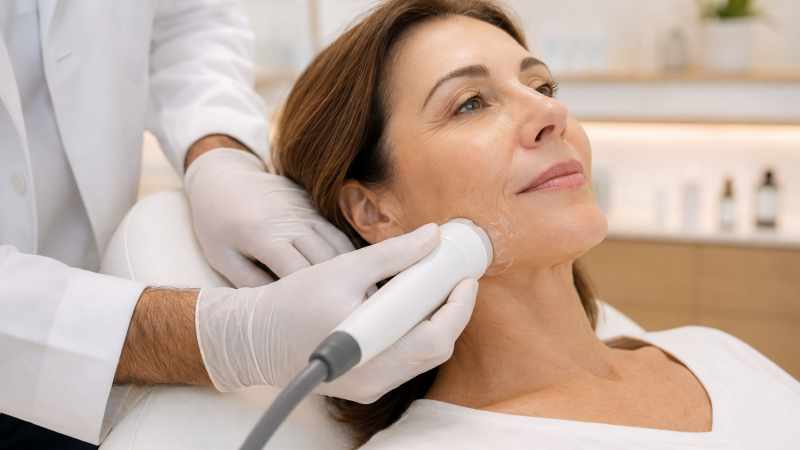
Radiofrequency Treatments
 
Radiofrequency treatments rely on generating heat within the skin and underlying target tissues using controlled electromagnetic energy. The goal is to support skin firmness and the process of collagen remodeling that occurs over time.
 
Depending on the device used, radiofrequency energy can be delivered via monopolar, bipolar, or multipolar systems. The depth of treatment, energy level, and session plan are determined based on the device's specifications, the treatment area, and the individual's skin structure.
 
## What Can It Be Used For?
 
In suitable candidates, radiofrequency can be used to:
 
*   Address mild laxity in the face, jawline, and submental (double chin) area
*   Support skin firmness and elasticity
*   Reduce the appearance of fine lines
*   Improve skin quality on the neck, décolletage, and certain body areas
*   Help reduce the appearance of cellulite (with specific devices)
 
Radiofrequency is not a substitute for surgical face or body lifting procedures. It may not be sufficient on its own for individuals with significant sagging or excessive adipose (fat) tissue.
 
## Treatment and Session Plan
 
Before the procedure, the skin and the treatment area are assessed. After applying a suitable gel to the skin, the device handpiece is moved over the target area using controlled motions. A gradually increasing sensation of heat may be felt during the treatment.
 
The number of sessions varies depending on the technology used, the treatment area, and the desired outcome. Since collagen remodeling takes time, results may appear gradually over weeks or months. A specific degree of tightening or slimming cannot be guaranteed.
 
## Potential Side Effects
 
Temporary redness, sensitivity, a sensation of heat, or mild swelling may occur after the procedure. Improper use of the device or energy settings may result in burns, blistering, discoloration, tissue damage, or scarring.
 
The procedure may not be suitable for individuals with pacemakers or electronic implants, those who are pregnant, or those with active infections or open wounds in the treatment area. The physician must be informed prior to the procedure about any metal implants, circulatory or sensory disorders, and previous aesthetic treatments.
 
## Is It the Same Procedure as Microneedle Radiofrequency?
 
No. In needle-free radiofrequency, energy is delivered via a handpiece applied to the skin's surface. In microneedle radiofrequency, however, energy is delivered to specific depths through microneedles that penetrate the skin. The application method, recovery process, and potential risks differ between the two.
 
At the Dermatology Practice of Specialist Dr. Armin Müştak, suitability for radiofrequency treatment is determined through a dermatological assessment. The specific method and treatment plan are tailored to the individual's skin structure and needs.

Frequently Asked Questions

Radiofrequency (RF) uses electrical energy to generate controlled heat within the tissue. The aim is to support tissue remodeling and collagen production at an appropriate depth. While lasers use light energy, radiofrequency works with a different form of energy. The device, applicator, and treatment settings used all influence both the results and potential risks.

With non-invasive radiofrequency, energy is delivered through an applicator placed against the skin’s surface. RF microneedling—sometimes called “Gold Needle” treatment—uses fine needles to enter the skin and deliver energy at controlled depths. The two methods differ in their uses, the level of discomfort experienced during treatment, and recovery time. Not every radiofrequency treatment involves microneedling.

In suitable patients, radiofrequency may help improve the appearance of mild skin laxity, fine lines, and uneven skin texture. RF microneedling may also be considered for certain types of acne scars and enlarged pores. However, it cannot provide the same results as a surgical facelift when significant sagging or excess skin is present.

The number of sessions and the intervals between them depend on the device used, the treatment goals, and the individual’s skin characteristics. Because collagen remodeling takes time, results generally develop gradually over several weeks or months. The degree and duration of improvement vary from person to person. Results are not considered permanent, and follow-up assessment or additional treatments may be recommended when needed.

The number of sessions and the intervals between them depend on the device used, the treatment goals, and the individual’s skin characteristics. Because collagen remodeling takes time, results generally develop gradually over several weeks or months. The degree and duration of improvement vary from person to person. Results are not considered permanent, and follow-up assessment or additional treatments may be recommended when needed.

Suitability is determined during a medical assessment. Tell your doctor if you have a pacemaker or another electronic implant, a metal implant in the treatment area, are pregnant, have an active infection or wound-healing problems, or take any medications. After treatment, follow the recommended aftercare instructions, protect the skin from the sun, and do not pick at any scabs. Contact the treating physician if you develop increasing pain, blistering, discharge, or unexpected numbness.

Contact Us