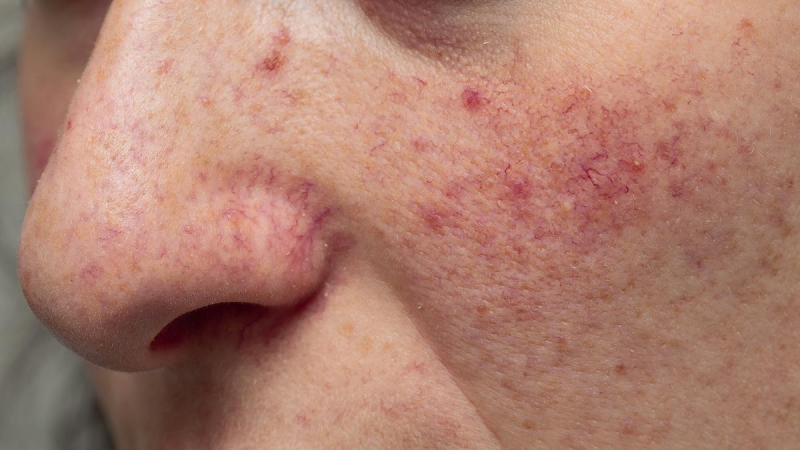
Fine red, purple, or bluish blood vessels on the face, around the nose, or on the legs are common.
Medically known as telangiectasia, these visible vessels develop when small blood vessels near the skin’s surface become enlarged.
They are often called broken capillaries, although the vessels have usually widened rather than actually broken.
Laser treatments, intense pulsed light (IPL), and sclerotherapy in suitable patients can help reduce their appearance.
Facial and leg telangiectasias may have different causes and may require different treatments.
Genetic predisposition, aging, sun damage, hormonal influences, and skin characteristics can all contribute to visible small blood vessels.
Facial telangiectasias are often associated with rosacea and chronic sun exposure.
On the legs, prolonged standing, pregnancy, hormonal changes, family history, and factors affecting venous circulation may play a role.
Some telangiectasias are primarily a cosmetic concern, while others occur alongside an underlying vascular condition.
Facial telangiectasias most commonly appear on the cheeks, along the sides of the nose, and across the nose.
They may be associated with:
Facial vessels may appear as individual fine red lines or alongside diffuse redness.
These two patterns may require different treatment plans.
Rosacea is a chronic skin condition that mainly affects the central face, causing redness, flushing, burning, and sometimes acne-like bumps.
In some people with rosacea, superficial blood vessels remain enlarged and become visible.
Medications such as metronidazole, ivermectin, and azelaic acid may help control the inflammatory symptoms of rosacea.
However, vascular lasers and light-based treatments such as IPL may more directly address visible blood vessels.
Laser treatment does not address every mechanism involved in rosacea. When needed, it is combined with medication and appropriate skin care.
Fine red, purple, or bluish leg vessels often form a web-like pattern.
These are commonly called spider veins.
In some patients, they occur alongside larger, bluish reticular veins.
Leg telangiectasias do not always indicate underlying venous disease. However, leg heaviness, pain, swelling, prominent varicose veins, or skin discoloration warrant further assessment of venous circulation.
When appropriate, venous Doppler ultrasound may be used to investigate underlying venous insufficiency.
During vascular laser treatment, hemoglobin within the blood vessel absorbs light energy.
The resulting controlled heat affects the vessel wall, helping the targeted vessel close or become less visible over time.
Protecting the surrounding healthy skin is important.
The laser type, wavelength, and treatment settings are selected according to vessel diameter, depth, color, and the patient’s skin type.
Long-pulsed 1064 nm Nd:YAG lasers may be used to treat certain deeper or larger superficial blood vessels.
They may be considered for selected facial telangiectasias and suitable small leg vessels.
However, they may not be the first choice for every fine, superficial vessel.
Appropriate energy settings, cooling, and skin type assessment are important. Improper treatment can cause burns, pigmentation changes, or scarring.
Intense pulsed light (IPL) uses high-intensity light across a broad range of wavelengths.
BBL is a form of intense pulsed light technology.
These treatments may help reduce diffuse facial redness, visible vessels associated with rosacea, and certain fine telangiectasias.
IPL and BBL work differently from lasers that emit a single wavelength.
Treatment settings should be selected according to skin tone, vessel characteristics, and skin sensitivity.
PDL is a vascular laser used particularly for superficial red vessels and persistent redness associated with rosacea.
It can be an effective option for selected patients.
However, it is not available in every practice, and treatment outcomes depend on more than the device alone.
Sclerotherapy is an injection treatment used primarily for suitable spider veins and reticular veins on the legs.
A substance called a sclerosant is injected into the vessel to encourage it to close.
It can be an effective treatment for small leg veins in appropriately selected patients.
Possible side effects include temporary skin darkening, the appearance of new fine vessels known as telangiectatic matting, pain, and inflammatory reactions. Rare but serious vascular complications are also possible.
Sclerotherapy and laser treatment are not interchangeable in every situation. The choice depends on vessel characteristics and whether underlying venous disease is present.
Vascular lasers or IPL/BBL may be suitable for fine red facial vessels and diffuse redness associated with rosacea.
For leg veins, assessment considers vessel diameter, depth, and their relationship to the venous system.
Some very fine vessels may respond to laser treatment, while sclerotherapy may be more appropriate for certain leg telangiectasias.
If venous insufficiency is present, treating the visible surface vessels alone may not be enough.
The number of sessions depends on the location, diameter, depth, and extent of the vessels, as well as the treatment method.
Some facial vessels may improve noticeably after a small number of sessions, while more widespread vessels may require multiple treatments.
Leg veins also often require treatment in stages.
Treated vessels may become less visible or disappear. However, new vessels may develop in other areas over time.
Laser pulses may cause a brief stinging sensation, often compared to the snap of a rubber band.
Some vessels may temporarily darken after treatment.
Redness, mild swelling, or tenderness may also occur.
Sclerotherapy injections may cause mild burning or stinging.
The level of discomfort varies with the treatment area and method.
Laser and light treatments may cause temporary redness, swelling, bruising, or tenderness.
Less common complications include burns, blistering, pigmentation changes, and scarring.
Sclerotherapy may cause skin darkening, new fine vessels, or localized inflammation. Careful patient selection is important because very rare serious complications can occur.
Proper eye protection is essential during facial laser and light treatments.
Treatment planning by an experienced physician is particularly important in sensitive areas such as the nose and around the eyes.
Treated vessels may close and become invisible.
However, new telangiectasias may develop over time if genetic predisposition, rosacea, sun damage, or venous circulation problems persist.
Appropriate skin care, sun protection, and maintenance treatment when needed are particularly important for patients with rosacea.
At Dr. Armin Müştak’s private dermatology practice, facial and leg telangiectasias are assessed according to vessel characteristics and the patient’s skin type.
The practice’s 1064 nm Nd:YAG laser and IPL/BBL technologies may be considered for suitable patients to reduce visible superficial vessels and redness associated with rosacea.
If venous insufficiency is suspected in patients with leg veins, further vascular assessment and appropriate treatment options are planned.
Effective treatment begins with understanding why the vessels have developed and which approach is most likely to help.
Suitable vessels can be significantly reduced with laser or IPL/BBL treatment, and some may disappear completely. However, removal of all vessels in a single session cannot be guaranteed, and new vessels may develop over time.
Sclerotherapy is often preferred for certain leg telangiectasias and reticular veins. Laser treatment may be suitable for some fine vessels. Treatment selection depends on vessel diameter, depth, and the condition of the venous circulation.
Yes. Vascular lasers and IPL/BBL can help reduce persistent redness and visible blood vessels associated with rosacea. However, medication and appropriate skin care may also be needed to manage inflammatory symptoms.
Proper technique can reduce the risk of scarring, but it cannot eliminate it entirely. Temporary redness, bruising, and pigmentation changes may occur. Burns or permanent scarring can develop rarely, making careful patient selection and treatment technique important.

Aesthetic dermatology focuses on maintaining skin health, evaluating age-related changes,…
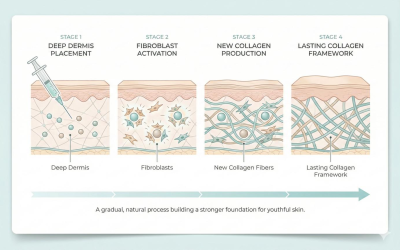
Poly-L-lactic acid (PLLA) is a biocompatible, biodegradable injectable material…
What Is Laser Tattoo Removal? Picosecond Laser Treatment Tattoos…
Facial aesthetics involves more than lip fullness, cheekbone definition, or…

The forehead forms the upper third of the face and…

The position of the chin in relation to the rest…
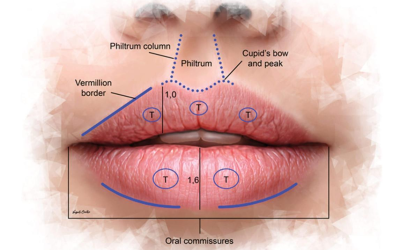
The lips play an important role in facial expression, the…
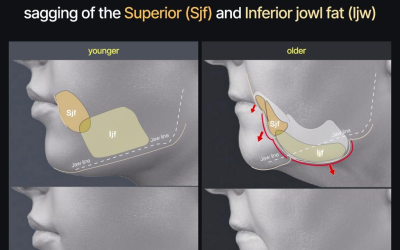
Facial sagging describes changes in facial contours and soft tissues…

The eye area is one of the face’s most…

Laser hair removal is a light-based procedure designed…

Facial changes over time involve more than just wrinkles.…
Botulinum toxin is a medical product that temporarily reduces…
Dermal filler treatments are injection procedures performed to address…
PRP stands for "Platelet-Rich Plasma." A small sample of…
Fine red, purple, or blue veins appearing on the…
Mesotherapy involves the administration of small amounts of selected…
Radiofrequency treatments rely on generating heat within the skin…