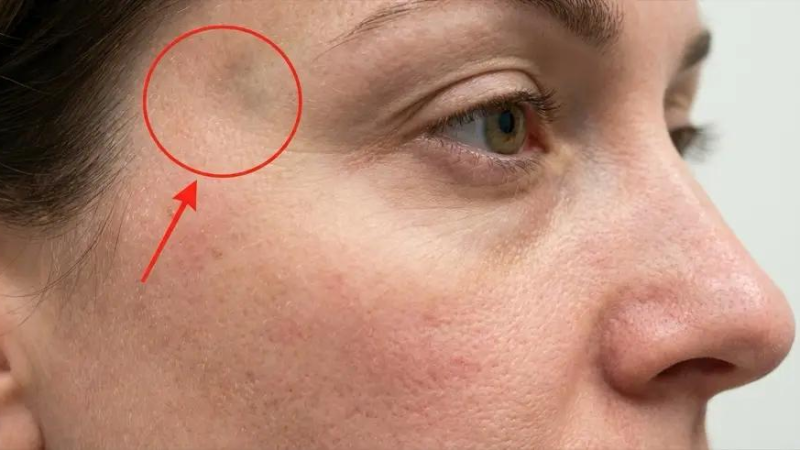
Facial aesthetics involves more than lip fullness, cheekbone definition, or the appearance of the jawline.
The transitions between the forehead, eyebrows, eye area, temples, and cheeks also play an important role in overall facial appearance.
The temples, or temporal regions, create a natural connection between the upper and middle face.
Volume loss in this area over time can make the face appear more hollow or angular.
The temples lie beside the eyes, between the forehead and cheekbones.
They contribute to the outer contour of the face.
Their appearance is assessed in relation to:
Pronounced temple hollowing can make the cheekbones appear more prominent and the forehead and eye area look more angular.
However, mild hollowing is a natural feature of some faces and does not necessarily require treatment.
Several factors can contribute to volume loss in the temples.
The fat, muscle, and surrounding support tissues in the temporal region can change with age.
These changes may gradually create a more hollow appearance.
Significant weight loss can reduce volume in the temples, as it can in other areas of the face.
Some people have naturally hollow temples from a young age.
This alone does not indicate a medical condition or an aesthetic flaw.
The relative positions of the forehead bone, cheekbones, temporal muscle, and fat compartments influence the appearance of the temples.
In some faces, temporal volume loss may cause:
Assessment should consider each person’s individual features.
Facial aesthetic assessment focuses on harmony within a person’s natural anatomy rather than a standard facial template.
On average, female and male faces may differ in the contours of the forehead, brows, cheekbones, and temporal region.
Some women have a softer transition from the temples to the cheekbones, while some men have more defined bone and muscle contours.
However, these features vary from person to person.
Assessment should be guided by individual facial structure and expectations rather than a single gender-based ideal.
Facial sagging cannot be explained by volume loss in one area alone.
Reduced skin elasticity, changes in fat compartments, changes in ligaments and supporting tissues, and changes in bone structure all contribute to facial aging.
Temple hollowing may contribute to an aged appearance in the upper face.
However, adding volume to the temples alone will not correct significant sagging of the cheeks or jawline.
Facial rejuvenation planning should therefore include an assessment of the entire face.
During a dermatologic and aesthetic facial assessment, the face is examined from the front and from different angles.
The assessment considers:
Natural facial anatomy and treatment expectations are also discussed.
Not every hollow temple requires treatment.
However, treatment options may be considered for suitable patients with noticeable volume loss who are concerned about its appearance.
Hyaluronic acid fillers may be used in appropriately selected patients to address temporal volume loss and support facial contours.
Results can be assessed relatively soon after treatment.
The product, amount, and anatomical depth of placement are determined individually.
Biostimulatory products such as poly-L-lactic acid (PLLA) and calcium hydroxylapatite (CaHA) are used in some facial rejuvenation approaches.
These products differ in their properties, the time needed for results to develop, and how complications are managed.
Not every product is suitable for every temporal region or patient.
Using the patient’s own fat to restore volume may also be considered in some cases.
This requires a surgical procedure, and results vary according to individual factors.
The temporal region is anatomically complex and contains important blood vessels and nerves.
Temple filler treatment therefore requires more than simply adding volume.
Temporary swelling, bruising, tenderness, or contour irregularities may occur.
Rare but serious complications include vascular occlusion, skin damage, and vision loss.
Careful patient selection, detailed anatomical knowledge, an appropriate product, and sound injection techniques are important.
A completely flat or very full temple contour does not suit every face.
A slight inward curve can look natural and balanced in some people.
When treatment is appropriate, the aim is to create a contour that complements the overall face.
At Dr. Armin Müştak’s private dermatology practice, aesthetic facial assessment considers overall facial anatomy alongside individual wrinkles or areas of volume loss.
The temples are assessed in relation to the forehead, eyebrows, cheekbones, cheeks, and outer facial contour.
For suitable patients, treatments for volume loss are planned according to individual anatomy and safety considerations.
Natural-looking results begin with a careful assessment of the whole face and a clear understanding of where treatment may be helpful.
Volume loss in the temples can make the upper face appear more hollow and angular in some people. However, mild hollowing may be part of a person’s natural facial structure and does not always require treatment.
Restoring an appropriate amount of volume to the temples may improve the outer facial contour. However, temple fillers alone cannot correct significant sagging of the cheeks or jawline. Facial aging should be assessed as a whole.
Hyaluronic acid fillers may be considered for suitable patients. Certain collagen-stimulating products and fat grafting may also be options. Treatment selection depends on individual anatomy and treatment goals.
The temporal region contains important blood vessels and nerves. In addition to temporary side effects such as swelling and bruising, rare but serious complications can occur, including vascular occlusion and vision loss. Careful anatomical assessment and the treating physician’s experience are therefore important.

Aesthetic dermatology focuses on maintaining skin health, evaluating age-related changes,…
Poly-L-lactic acid (PLLA) is a biocompatible, biodegradable injectable material…
What Is Laser Tattoo Removal? Picosecond Laser Treatment Tattoos…

The forehead forms the upper third of the face and…
The position of the chin in relation to the rest…
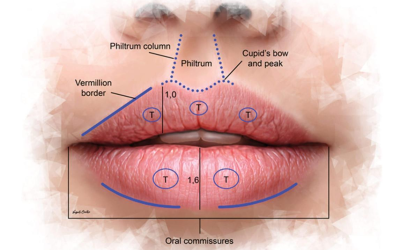
The lips play an important role in facial expression, the…
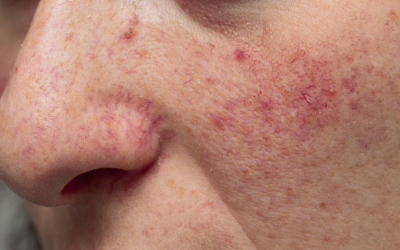
Fine red, purple, or bluish blood vessels on the face,…
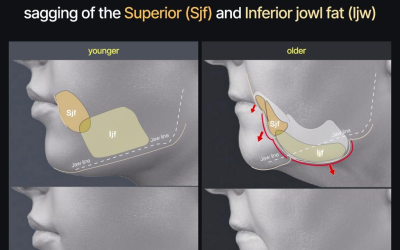
Facial sagging describes changes in facial contours and soft tissues…

The eye area is one of the face’s most…

Laser hair removal is a light-based procedure designed…

Facial changes over time involve more than just wrinkles.…

Botulinum toxin is a medical product that temporarily reduces…

Dermal filler treatments are injection procedures performed to address…

PRP stands for "Platelet-Rich Plasma." A small sample of…
Fine red, purple, or blue veins appearing on the…
Mesotherapy involves the administration of small amounts of selected…
Radiofrequency treatments rely on generating heat within the skin…