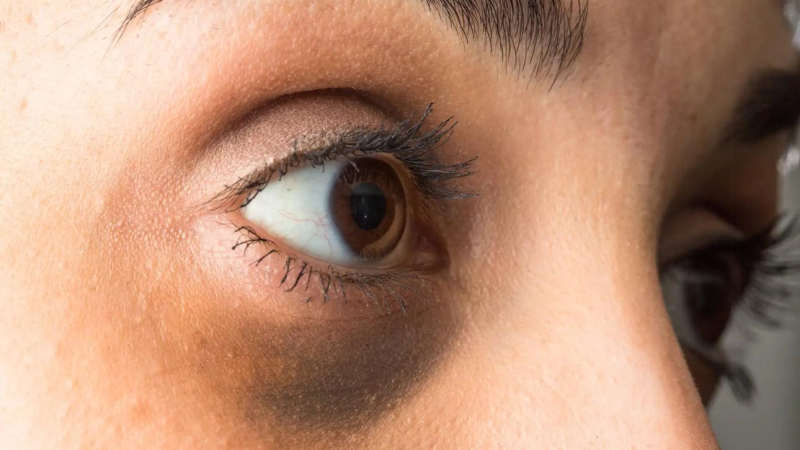
The eye area is one of the face’s most noticeable features and often one of the first places where signs of aging become apparent.
Dark circles, hollows, bags, and fine lines can create a tired appearance.
However, not every dark circle is caused by pigmentation, and not every under-eye hollow requires filler.
Choosing an appropriate treatment requires an assessment of the surrounding anatomy and the factors contributing to the darkness.
The skin beneath the eyes is particularly thin and delicate.
Several structures influence the appearance of this area:
Changes in these structures can create discoloration, shadowing, or bags beneath the eyes.
Dark circles have several possible causes. More than one factor may contribute in the same patient.
Increased melanin in the skin can cause brown or gray-brown discoloration around the eyes.
Genetic predisposition, sun exposure, atopic dermatitis, and repeated scratching may contribute to pigmentation.
In these patients, the main concern is a change in skin color.
Thin under-eye skin can make superficial blood vessels more visible.
This may create a blue, purple, or pinkish appearance.
Vessel visibility depends on skin thickness and the anatomy of the area.
Some people have a dark under-eye appearance without an actual increase in pigmentation.
A pronounced tear trough, midface volume loss, or shadows cast by under-eye bags may be responsible.
The darkness may become more noticeable when light comes from the side.
Forward prominence of lower eyelid fat and changes in supporting tissues can create under-eye bags.
The shadows beneath these bags may resemble dark circles.
Temporary puffiness caused by allergies or fluid retention should be assessed separately from structural under-eye bags.
The tear trough is a natural anatomical depression extending from the inner lower eyelid toward the cheek.
It is naturally more prominent in some people.
With aging, reduced midface volume and changes in surrounding tissues can make it more noticeable.
However, a visible tear trough does not always require treatment.
Under-eye hollows primarily reflect anatomical depth or a lack of volume.
Under-eye bags involve prominent fat or swelling.
Both can occur together.
Volume support may help a suitable patient with hollowing, while filler in someone with pronounced bags may increase puffiness.
Treatment around the eyes therefore requires a detailed anatomical assessment.
Aging may cause skin thinning, reduced elasticity, fine lines, and changes in supporting tissues.
Loss of midface volume can also affect the transition between the lower eyelid and cheek.
Some patients develop a deeper tear trough, while others have more prominent bags or excess skin.
No single approach to rejuvenating the eye area is suitable for everyone.
During a dermatologic and aesthetic examination, the eye area is assessed from the front and from different angles.
The assessment considers:
Dermoscopy may help assess pigmentation and visible blood vessels.
Treatment depends on the underlying cause of the darkness or hollowing.
Sun protection and appropriate topical treatments may be considered for darkness caused by increased melanin.
Azelaic acid, niacinamide, and certain other pigment-regulating products may be used in selected patients.
Because the skin around the eyes is sensitive, strong skin-lightening products and chemical peels should not be used without professional guidance.
Carefully selected laser technologies may be considered for under-eye darkness related to pigmentation or visible blood vessels.
Certain pigment-targeting lasers may be used according to the pigmentation pattern, while selected vascular lasers may address visible vessels.
Protecting the cornea and internal eye structures is essential during treatment around the eyes.
All laser and light procedures near the eyes require specialized eye protection appropriate to the treatment area.
Not every device is suitable for every part of the eye area.
Hyaluronic acid fillers may be considered for selected patients with a pronounced tear trough and limited skin laxity or under-eye bags.
The aim is to soften the transition between the lower eyelid and cheek without overfilling the area.
However, treatment can cause prolonged swelling, a bluish appearance known as the Tyndall effect, contour irregularities, or visible filler.
Rare but serious complications include vascular occlusion, skin damage, and vision loss.
Under-eye filler should therefore not be recommended for every patient.
In some patients, under-eye hollowing reflects changes in cheek and midface volume as well as the tear trough itself.
Midface anatomy should therefore be assessed before treating the under-eye area directly.
For suitable patients, restoring midface volume may help create a more balanced transition between the lower eyelid and cheek.
Platelet-rich blood products such as PRP and PRF are being studied for their potential to improve skin quality around the eyes.
Some studies have reported improvements in skin appearance and fine lines.
However, scientific evidence for their long-term effectiveness in treating dark circles and under-eye hollows remains limited.
They should not be presented as standard treatments for every under-eye concern or as providing guaranteed results.
Fractional laser treatment may be considered for suitable patients with fine lines and certain changes in skin quality around the eyes.
With systems such as fractional CO₂ laser, skin type, recovery time, and the risk of pigmentation changes require consideration.
Treatment close to the eyelids requires specialized eye protection and advanced knowledge of the area’s anatomy.
Lower eyelid surgery, or blepharoplasty, may be more appropriate for patients with prominent fat bulges and substantial excess skin.
In selected patients, surgery aims to reshape or reposition excess fat and improve the eyelid contour.
Fillers and laser treatments should not be expected to provide equivalent results in every case.
The eye area is anatomically sensitive because of its thin skin, important blood vessels, and proximity to the eyes.
Injections may cause bruising, swelling, asymmetry, nodules, or persistent puffiness.
Laser treatments can cause burns and pigmentation changes. Serious eye injuries may occur if appropriate eye protection is not used.
Filler-related vascular occlusion is extremely rare but serious.
Appropriate product, device, and technique selection are important, as is preparedness to manage complications.
Results depend on the cause of the darkness.
Pigmentation may improve with appropriate topical or laser treatments.
For shadowing caused by volume loss, anatomical support may help selected patients.
However, complete correction is not always possible, particularly when inherited features, thin skin, or several contributing factors are involved.
At Dr. Armin Müştak’s private dermatology practice, under-eye dark circles and hollows are assessed by considering pigmentation, visible blood vessels, skin quality, volume loss, and the surrounding anatomy together.
For suitable patients, topical treatments, selected laser procedures, skin resurfacing, and volume support may be considered based on individual needs.
Surgical assessment may be more appropriate for patients with pronounced under-eye bags or substantial excess skin.
Effective treatment around the eyes begins with identifying the underlying anatomical cause of darkness or hollowing.
Under-eye darkness may result from increased pigmentation, blood vessels visible through thin skin, anatomical hollows, or shadows cast by under-eye bags. Some patients have more than one contributing factor.
Appropriate laser treatments may help with certain types of under-eye darkness caused by pigmentation or visible blood vessels. However, shadows caused by anatomical features may not improve with laser treatment. Careful treatment selection and specialized eye protection are essential.
No. Volume support may help some patients with a pronounced tear trough. However, fillers may not be appropriate for people with under-eye bags, a tendency toward swelling, or significant skin laxity.
Nonsurgical treatments may provide limited improvement in mild skin and contour changes. However, lower eyelid surgery may be more appropriate when prominent fat bulges or excess skin are present.
Aesthetic dermatology focuses on maintaining skin health, evaluating age-related changes,…
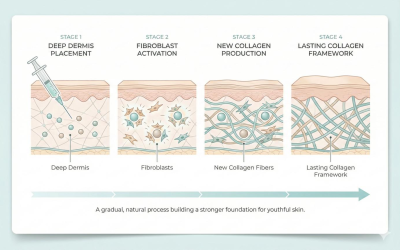
Poly-L-lactic acid (PLLA) is a biocompatible, biodegradable injectable material…
What Is Laser Tattoo Removal? Picosecond Laser Treatment Tattoos…
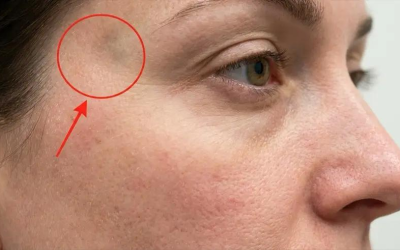
Facial aesthetics involves more than lip fullness, cheekbone definition, or…

The forehead forms the upper third of the face and…
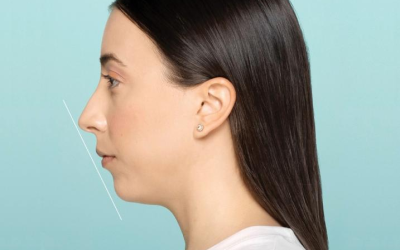
The position of the chin in relation to the rest…
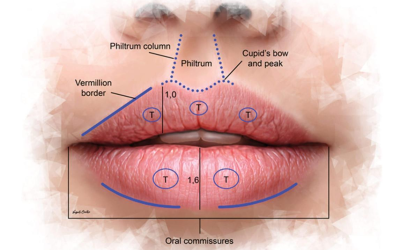
The lips play an important role in facial expression, the…
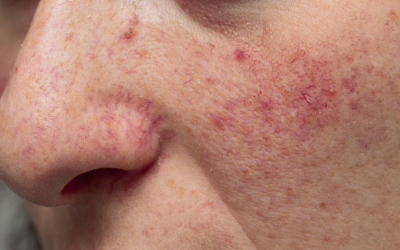
Fine red, purple, or bluish blood vessels on the face,…
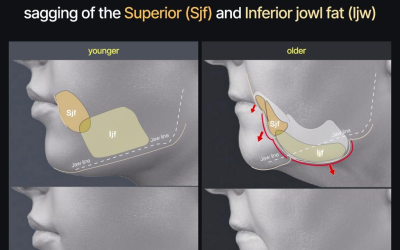
Facial sagging describes changes in facial contours and soft tissues…
Laser hair removal is a light-based procedure designed…
Facial changes over time involve more than just wrinkles.…
Botulinum toxin is a medical product that temporarily reduces…
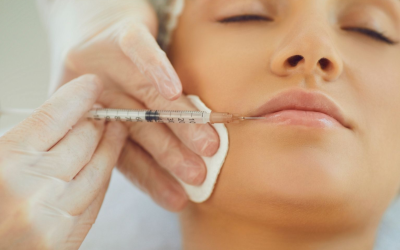
Dermal filler treatments are injection procedures performed to address…

PRP stands for "Platelet-Rich Plasma." A small sample of…
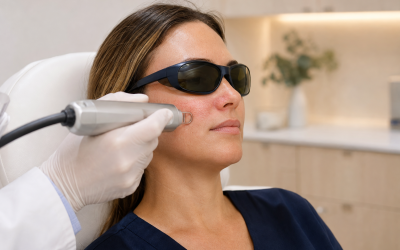
Fine red, purple, or blue veins appearing on the…
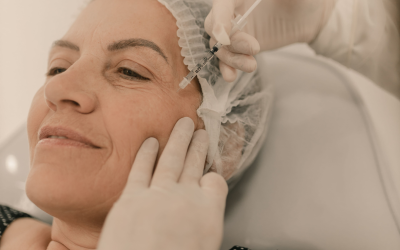
Mesotherapy involves the administration of small amounts of selected…
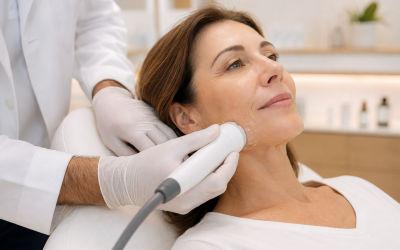
Radiofrequency treatments rely on generating heat within the skin…